Obby's World Easy Parkour
H2T GLOBAL PTE. LTD.Adventure
3.320.00 Reviews
- Version
- 1.23
- Installs
- 5.00M
- Age Rating
- Everyone
Screenshots
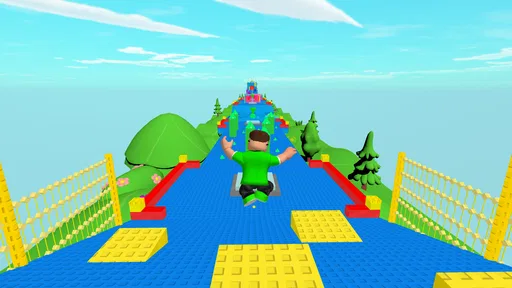
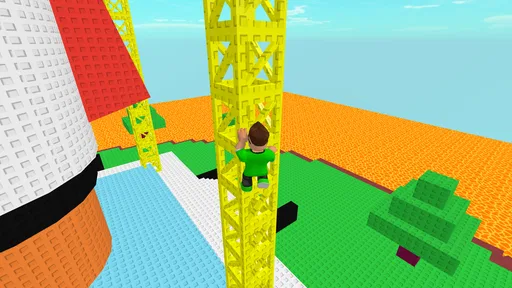
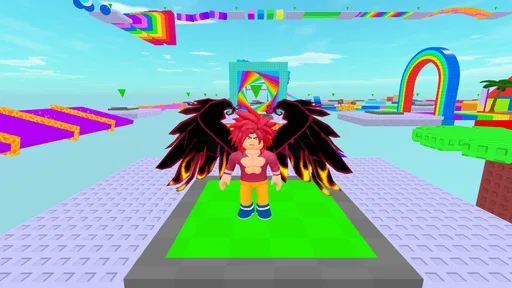
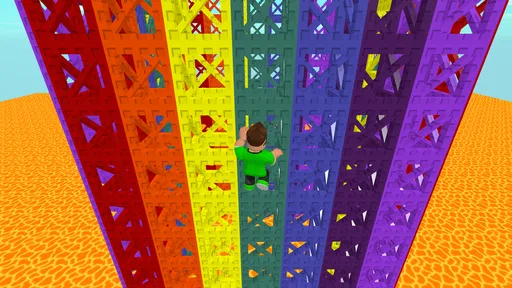
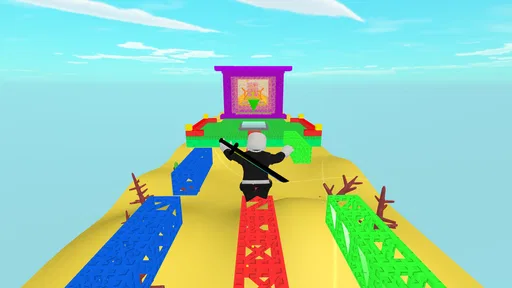
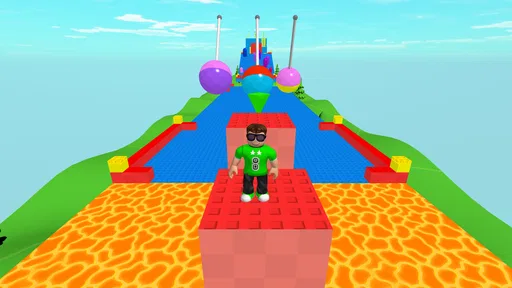
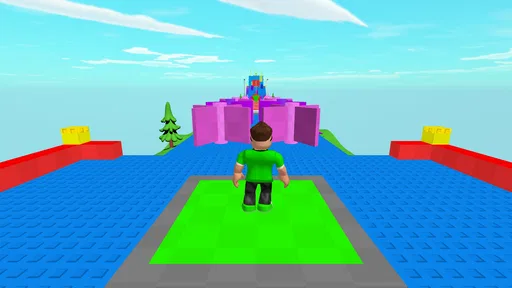
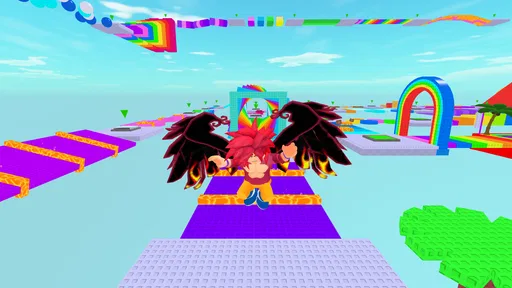
Our Review of Obby's World Easy Parkour
 Analysis by Appyee
I approached Obby's World Easy Parkour as a short-session adventure game built around one simple question: can I read a course quickly enough to move through it without losing my rhythm? That focus matters more than the cheerful title might suggest. This is not the kind of game I would open for a long story, a large map, or a complicated character-building system. I play it for the movement challenge, the quick restart, and the small satisfaction of getting past an obstacle that stopped me a few moments earlier.
The game comes from H2T GLOBAL PTE. LTD. and is free to play, with an Everyone age rating. It sits in the adventure category, although its appeal is much closer to a light parkour obstacle game than to a traditional exploration adventure. The store summary asks whether the player is fast and daring enough to become a parkour master, but my experience is that speed alone is not enough. The useful skill is learning to judge each jump before committing to it.
That is the capability I found most important during play: the game turns visual timing into the main test. You look at the next section, decide whether to move immediately or wait for a better position, and then try to keep control through the landing. For players who enjoy compact challenges and repeated attempts, that creates a pleasant loop. For anyone expecting a deep adventure, it can feel narrow.
Reading the course is the real skill
I found that the most useful way to approach each course is to treat the space between obstacles as part of the challenge, not just a pause before the next jump. That helps me decide when to steady my movement and when to keep momentum, especially after a clean landing. It also makes each attempt easier to learn from, because I can distinguish a rushed approach from a poorly judged jump.
Why visual timing matters more than raw speed
Easy parkour games can look simple because the objective is easy to understand. Move forward, cross the obstacles, and avoid falling. In practice, the difficulty comes from making several small decisions in sequence. A jump may be possible, but the safest launch point can be slightly different from the first place that looks convenient. I found myself paying attention to spacing, the shape of the next platform, and whether I was approaching an obstacle too quickly.
This makes the game more interesting than a basic race through a straight path. The challenge is not just pressing movement controls rapidly. It is building a visual routine: scan, line up, jump, correct, and prepare for the next landing. Once I started treating each obstacle as a separate timing problem rather than trying to rush the whole course, my attempts became more consistent.
That change in approach is also the best tip I can give new players. Do not measure progress only by how far you travel in one attempt. Pay attention to the exact moment where your run breaks down. If a jump repeatedly fails, the problem may be your starting angle or your decision to move before the landing is stable. Small adjustments are more useful than frantic corrections.
How the repeated-attempt loop feels
The appeal comes from the short distance between failure and another attempt. I can try a section, identify what went wrong, and immediately apply that lesson. This is the kind of design that works well when I have only a few minutes available. I do not need to remember a long plot or rebuild a complicated setup before trying again.
There is a trade-off, though. Repetition is satisfying only when I feel that my mistake was understandable and that improvement is possible. When I misjudge a jump, the game encourages me to try again. When a failure feels caused by imprecise movement or an unclear landing, the same loop can become irritating. My enjoyment depended heavily on whether I was in the mood to practice rather than simply relax.
A useful personal routine is to slow down after reaching a new section. The instinct is often to celebrate a successful jump by rushing into the next one, which can throw away a good run. I had better results when I treated every landing as a checkpoint for my attention, even when the game itself did not change the pace for me. That habit turns the experience from random tapping into a small exercise in concentration.
What the parkour focus does to the adventure category
Calling this an adventure game is understandable, but players should set their expectations correctly. The adventure label may suggest exploration, characters, puzzles, or a narrative journey. Here, the adventure feeling comes mainly from moving through a course and facing the next obstacle. The environment is important because it tells me where to go, but the central reward is successful movement rather than discovering a large world.
Compared with a platform game focused on enemies or collectible progression, this is more direct. Compared with a story-led adventure, it is much lighter and more mechanical. Compared with a competitive racing game, it places less emphasis on opponents and more on personal control. I would choose this over those alternatives when I want a focused movement challenge, but I would choose a fuller adventure game when I want a reason to explore beyond reaching the next platform.
A practical session during a busy day
The best everyday use case is a short break between tasks. Imagine waiting for a bus, taking a few minutes after lunch, or sitting down before an appointment. I can open the game, attempt a section, and stop without feeling that I have abandoned a complicated story. The quick retry structure suits interrupted play better than games that require long uninterrupted rounds.
My advice in that situation is to play with a clear limit. Give yourself a small number of focused attempts, then stop if your decisions become rushed. Parkour games can encourage the thought that the next try will certainly be the successful one, which makes it easy to spend longer than planned. The game works best as a compact mental break when I choose the session length instead of letting frustration choose it for me.
It can also work as a casual introduction to obstacle-course games for younger players, helped by its Everyone rating. I would still expect an adult to judge whether the repeated timing challenges suit a particular child. The age rating tells me the intended content is broadly accessible, but it does not guarantee that every player will find the controls equally comfortable or the repetition equally enjoyable.
Where it may frustrate you
The main limitation is the narrowness of the core activity. If you enjoy movement, that focus feels clean and refreshing. If you need character development, combat variety, social systems, or a strong narrative, the game may feel underdeveloped even when the individual obstacles are enjoyable. I would not recommend it as someone’s only adventure game unless they specifically prefer obstacle courses.
Another possible friction point is the difference between “easy” and “effortless.” The name sets a welcoming expectation, but accessible rules do not mean every sequence will be immediately consistent. Players who are new to this style may need time to understand how much momentum to carry and when to make corrections. That learning curve is not necessarily a flaw, but it is worth knowing before downloading it for a completely passive experience.
Phone play introduces another consideration. Parkour depends on quick visual decisions, so distractions, cramped hand placement, or a screen that makes the course hard to read can affect performance. I found that a steady grip and a clear view of the next obstacle mattered more than trying to play aggressively. If you usually play mobile games one-handed while doing something else, this may not be the most comfortable choice.
Three ways to get more from each attempt
Study the next landing, not only the next jump. Before moving, I look at where I need to finish rather than focusing on the obstacle directly in front of me. This helps me avoid landing at an awkward edge and immediately entering the next section without control.
Separate learning attempts from completion attempts. On a first try, I treat an unfamiliar section as practice and watch its layout. On the next try, I concentrate on executing what I already noticed. This prevents me from becoming annoyed when an early run is mainly about gathering information.
Use a calm reset after a mistake. Rapidly repeating the same failed input usually makes the next attempt worse. I pause mentally, identify whether I jumped too early, approached from the wrong angle, or rushed the landing, and then change one thing rather than everything.
These habits are not flashy features, but they change how the game feels. They also reveal the central trade-off: the experience rewards attention and patience more than constant speed. A player who wants to improve through observation will probably find more depth here than a player who simply holds forward and hopes to clear the course.
Performance expectations and version context
The current version is 1.23, and the listed minimum operating system is Android 7.1. That makes the game approachable for people using older Android devices, at least from a system-version perspective. I still would not assume that every phone will provide the same comfort, because parkour depends on responsive input and a readable display. A device that handles the game but introduces delayed controls would undermine the main skill the game asks for.
The game has reached over five million installs, while its average rating is 3.3 from around four thousand six hundred ratings. I read that combination as a sign of broad curiosity but mixed satisfaction rather than automatic proof of quality. The audience is large enough to show that the basic idea attracts mobile players, yet the rating also supports my cautious recommendation: try it if the parkour loop appeals to you, not simply because it is popular.
There are around twenty written reviews shown alongside those ratings, so I would pay more attention to your own first session than to a single enthusiastic or negative comment. With a simple obstacle game, personal tolerance for repetition and control precision matters a great deal. Someone who enjoys retrying a jump may see a fair challenge where another player sees unnecessary annoyance.
Who benefits most from the focused design
I think the strongest audience is made up of players who like short, repeatable challenges and want a game that can be understood quickly. It suits people who enjoy improving a route, testing their reactions, and turning a failed attempt into a better one. It is also a sensible free download for anyone curious about mobile parkour but not ready to commit to a large, demanding game.
It is less suitable for players who want a relaxing game with little chance of failure. It is also a weak match for anyone choosing an adventure game mainly for story, exploration, or long-term progression. In those cases, a narrative adventure or a broader platform game would give you more variety. I would also skip it if you dislike repeating the same obstacle until your timing improves, because repetition is not a side activity here; it is the main structure.
For families, the Everyone rating makes the game easier to consider from a content perspective, but the better question is whether the player enjoys precision challenges. For commuters and casual players, its free price and compact format are practical advantages. For serious platforming fans, it may serve as a lightweight warm-up rather than a complete replacement for a deeper precision platformer.
My recommendation after focusing on the core loop
What I like about Obby's World Easy Parkour is that it does not need a complicated premise to create a clear moment-to-moment test. Its strongest capability is the way it asks me to read an obstacle, commit to a movement choice, and learn from the result. That is enough to make a short session engaging when I want something active and uncomplicated.
What keeps me from giving an unqualified recommendation is the same focus. Once the novelty of the course style fades, the experience depends on whether you genuinely enjoy practice and repetition. There is no reason to choose it over a story-heavy adventure if story is what you want, and there is no reason to choose it over a more advanced platformer if you are looking for demanding depth.
Still, as a free adventure game for quick parkour attempts, it has a clear place on my phone. I would recommend it to a friend who wants a simple way to fill a few spare minutes, especially someone who enjoys improving through careful timing. I would describe it honestly as a focused obstacle game rather than a broad adventure: approachable in concept, more demanding in practice, and most rewarding when you slow down enough to understand why each jump succeeds or fails.
Verdict
Strengths of Obby's World Easy Parkour
- Simple controls make it accessible for younger players.
- Short levels are convenient for quick gaming sessions.
- Bright visuals make obstacles easy to recognize.
- Frequent checkpoints reduce frustration after mistakes.
- Runs smoothly on many entry-level mobile devices.
Limitations of Obby's World Easy Parkour
- Some levels may feel repetitive after extended play.
- Difficulty can vary noticeably between consecutive stages.
- Limited customization may reduce long-term motivation.
- Ads may interrupt gameplay, depending on the version.
- Precision jumps can be frustrating on smaller screens.
Other Releases by H2T GLOBAL PTE. LTD.
View All
Animal Safari - Sound Battle
Adventure3.9
Similar Picks in This Category
View All
Roblox
Roblox Corporation4.2

Pokémon GO
Niantic, Inc.3.5

Ninja warrior: legend of adven
TOH Games4.6

Ninja Arashi
Black Panther4.6

Eyes - The Horror Game
Fearless Games sp. j.4.5

Critical Action:Gun Strike Ops
FPS Shooter & Action Game4.3
Frequently Asked Questions
What is Obby's World Easy Parkour?
Obby's World Easy Parkour is a casual obstacle-course game focused on jumping, climbing, and reaching the finish line through colorful platforming stages. Its levels are designed to be approachable for beginners, with simple controls and a gradual difficulty curve. Players can practice timing, avoid hazards, and complete courses at their own pace while exploring a lighthearted game world.
Is Obby's World Easy Parkour suitable for beginners?
Yes, the game is mainly aimed at players who enjoy simple and accessible parkour challenges. The controls are generally easy to understand, and the early stages provide a gentle introduction to movement, jumping, and obstacle timing. However, later sections may still require patience and repeated attempts, especially when platforms move, gaps become narrower, or hazards are placed close together.
How do you play Obby's World Easy Parkour?
Gameplay is based on guiding your character across obstacle courses without falling or touching dangerous objects. You typically use on-screen controls to move and jump, then carefully time each action to land on platforms. Progress depends more on coordination and observation than on complicated strategy. If you fail, you can usually retry the section and learn the course layout.
Does Obby's World Easy Parkour require an internet connection?
The need for an internet connection can depend on the version and platform where you install the game. Basic parkour gameplay may work without a constant connection, but advertisements, updates, online features, analytics, or other services may require internet access. Before playing offline, it is best to launch the game once while connected and check which features remain available.
Is Obby's World Easy Parkour free to download and safe for children?
The game may be available as a free download, although free versions can include advertisements, optional purchases, or other monetization features. Parents should review the store listing, permissions, age rating, and privacy information before allowing children to play. Because obstacle games can encourage repeated attempts, younger players may also benefit from screen-time limits and supervision around in-app purchases.
Play our best games!


